What Is SIEM and How Does It Work?
Introduction
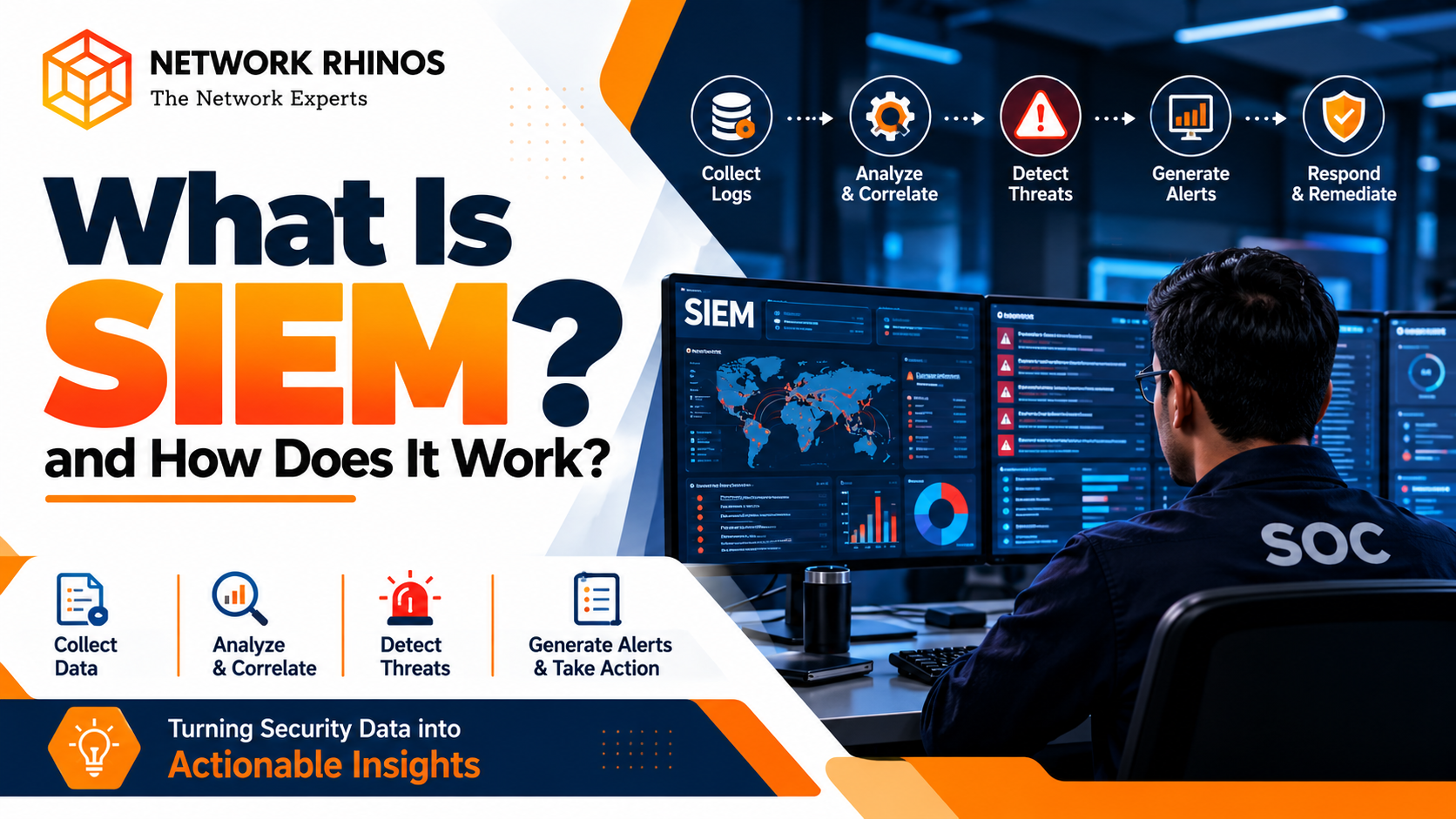
SIEM stands for Security Information and Event Management. It is a cybersecurity technology that collects security data from different systems, analyzes that data, and helps security teams detect and investigate suspicious activity.
In a Security Operations Center (SOC), SIEM is commonly used as a central place for monitoring security events.
How Does SIEM Work?
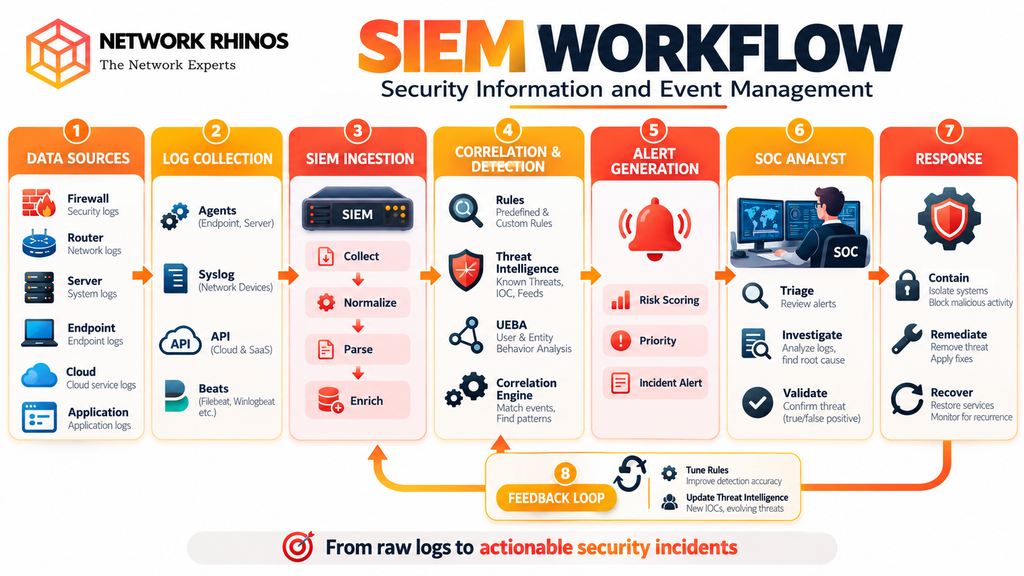
1. SIEM Collects Logs
SIEM collects logs and security events from different sources, such as:
- Firewalls
- Servers
- Routers and switches
- Endpoints
- Applications
- VPNs
- Cloud services
- Authentication systems
- Security tools
For example, a firewall may record that a device attempted to connect to a particular server.
2. It Normalizes the Data
Different devices can generate logs in different formats. SIEM processes and organizes this information so security analysts can search and compare events more easily.
3. It Correlates Events
This is one of the most important sections. Instead of looking at every log separately, SIEM can connect related events.
For example:
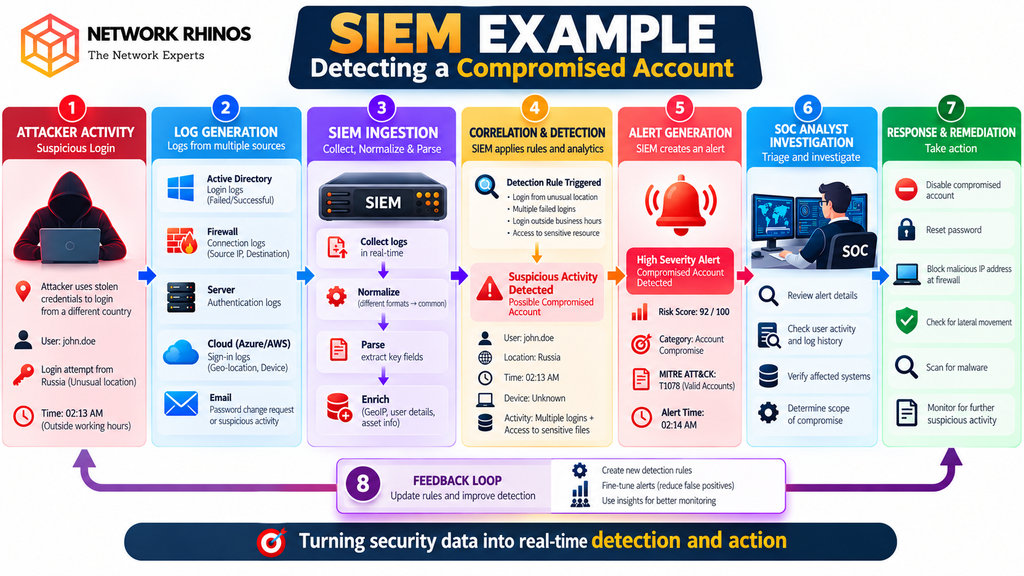
Multiple failed logins → Successful login → Login from unusual location → Sensitive file access
Individually, each event may not look highly suspicious. Together, they could indicate a possible account compromise.
4. SIEM Detects Suspicious Activity
SIEM uses detection rules, analytics, and other security logic to identify potentially suspicious behavior.
Examples include:
- Repeated failed login attempts
- Malware detection
- Suspicious administrator activity
- Unusual network connections
- Privilege escalation
- Possible data exfiltration
5. It Generates Alerts
When a detection rule identifies suspicious activity, the it can generate an alert.
A SOC Analyst then reviews the alert to determine whether it is:
- A false positive
- Benign activity
- Suspicious activity
- A confirmed security incident
SIEM Alert → SOC Analyst → Investigation → Decision
6. It Helps With Investigation
The analyst can search related logs and events to understand what happened.
For example:
Who logged in? → From where? → Which device was used? → What happened after login?
This helps build a timeline of the activity.
7. SIEM Supports Response
SIEM itself may not perform every response action, but it can integrate with other security tools and automation platforms. Depending on the organization’s setup, an investigation may lead to actions such as:
Block an IP → Disable compromised account → Isolate endpoint → Escalate incident
A simple horizontal infographic would work very well here.
SIEM vs Traditional Log Management
I’d add a comparison table here.
| Traditional Log Management | SIEM |
|---|---|
| Collects logs | Collects security data |
| Mainly focused on storage | Focuses on monitoring and analysis |
| Basic searching | Event correlation |
| Limited security detection | Security alerts and detection rules |
| Manual investigation | Investigation and analytics capabilities |
| Limited context | Correlates events across multiple sources |
SIEM → Collect → Correlate → Detect → Alert → Investigate
Popular SIEM platforms
Some commonly used SIEM platforms include:
- Splunk Enterprise Security
- Microsoft Sentinel
- IBM QRadar
- Google Security Operations
- Elastic Security
For someone preparing for a SOC Analyst career, understanding SIEM + networking + log analysis + incident response is particularly useful because these areas are closely connected in day-to-day security monitoring.