Top Cybersecurity Threats in 2026: What You Need to Know?
Cybersecurity is evolving faster than ever. As organizations continue adopting cloud computing, artificial intelligence (AI), and remote work, cybercriminals are also finding new ways to exploit vulnerabilities. The cybersecurity threats in 2026 are expected to be more sophisticated, automated, and difficult to detect than ever before.
Whether you’re an IT professional, business owner, or aspiring cybersecurity expert, understanding the latest cybersecurity threats is essential to protecting sensitive data and critical systems.
Why Cybersecurity Matters More Than Ever?
Every connected device, cloud application, and online transaction creates a potential entry point for attackers. Modern cyber attacks no longer target only large enterprises. Small businesses, educational institutions, healthcare providers, and individuals are equally vulnerable.
Organizations are now investing heavily in:
- Network Security
- Cloud Security
- Endpoint Security
- Threat Intelligence
- Security Operations Centers (SOC)
- Zero Trust Security
Keeping up with the cybersecurity trends in 2026 is no longer optional it’s a necessity.
1. AI-Powered Cyber Attacks
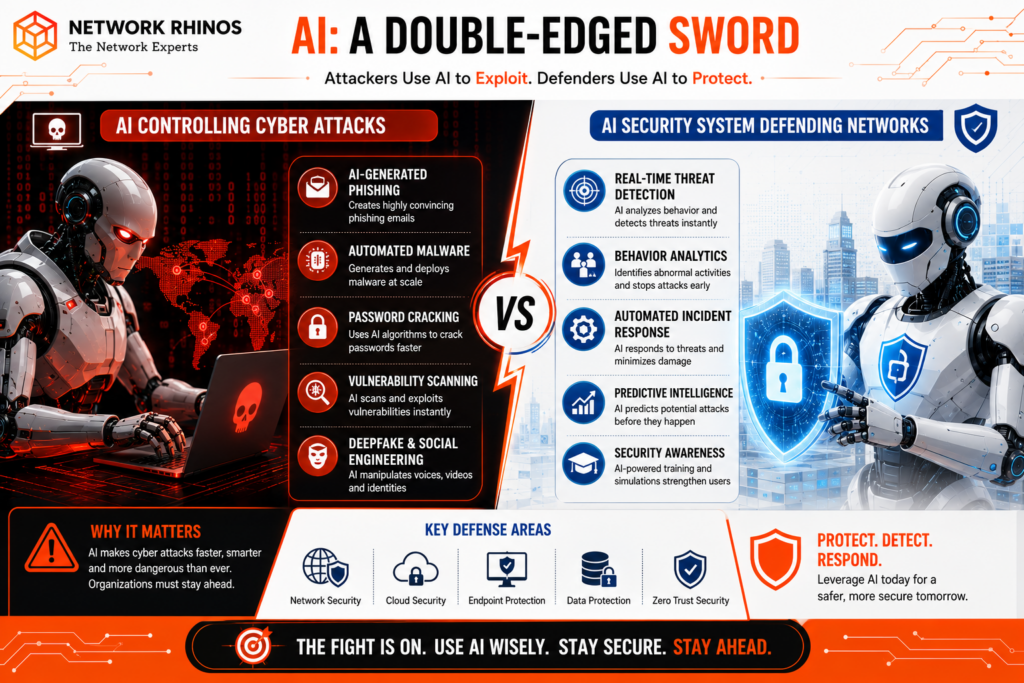
Artificial Intelligence has transformed cybersecurity, but attackers are using it too.
Modern hackers leverage AI to:
- Create highly convincing phishing emails
- Crack passwords faster
- Automate malware deployment
- Generate realistic deepfake videos and voices
- Scan networks for vulnerabilities within minutes
Unlike traditional attacks, AI-powered attacks continuously learn and adapt, making them significantly harder to detect.
How to Stay Protected?
- Implement AI-driven threat detection.
- Enable Multi-Factor Authentication (MFA).
- Conduct regular security awareness training.
- Keep software and operating systems updated.
2. Ransomware Attacks Continue to Rise
Ransomware attacks remain one of the biggest cybersecurity threats in 2026.
Instead of simply encrypting files, attackers now:
- Steal confidential information
- Threaten to leak customer data
- Target cloud backups
- Demand cryptocurrency payments
Industries such as healthcare, banking, manufacturing, and education continue to be prime targets.
Prevention Tips
- Maintain offline backups.
- Patch systems regularly.
- Restrict administrative privileges.
- Deploy Endpoint Detection and Response (EDR) solutions.
3. Phishing Attacks Are Smarter Than Ever

Traditional phishing emails are becoming increasingly difficult to identify.
Today’s phishing campaigns use:
- AI-generated emails
- Personalized social engineering
- Fake login portals
- QR code phishing (Quishing)
- Voice phishing (Vishing)
Even experienced professionals can fall victim to these attacks.
Best Practices
- Verify suspicious emails.
- Avoid clicking unknown links.
- Use password managers.
- Enable email filtering and anti-phishing tools.
4. Cloud Security Threats
As organizations migrate workloads to AWS, Azure, and Google Cloud, cloud security threats continue to increase.
Common cloud risks include:
- Misconfigured storage buckets
- Weak IAM policies
- Publicly exposed databases
- Insecure APIs
- Insider misuse
Businesses adopting cloud technologies must implement strong security controls from the beginning.
Cloud Security Best Practices
- Encrypt sensitive data.
- Enable least-privilege access.
- Regularly audit cloud configurations.
- Monitor cloud activity continuously.
5. Zero-Day Vulnerabilities
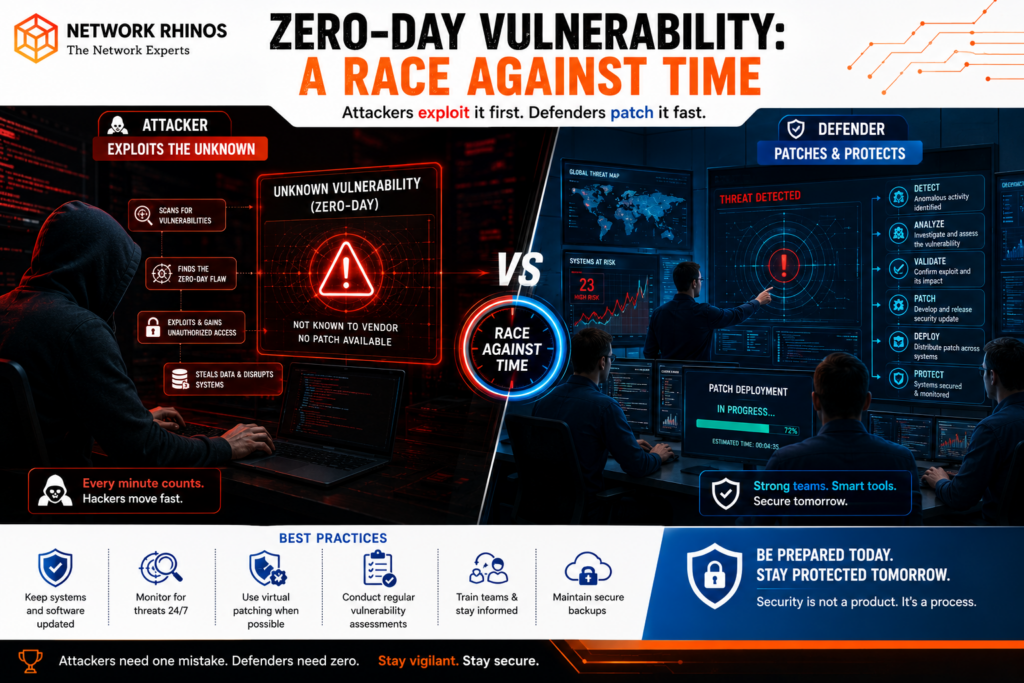
A zero-day vulnerability is a software flaw discovered before developers release a security patch.
Cybercriminals actively search for these vulnerabilities because organizations have no immediate protection.
Recent attacks have targeted:
- Web browsers
- VPN appliances
- Firewalls
- Enterprise software
- Operating systems
Protection Strategies
- Install security updates immediately.
- Use Virtual Patching where possible.
- Deploy Intrusion Detection Systems (IDS).
- Conduct vulnerability assessments regularly.
6. Social Engineering and Insider Threats
Technology isn’t always the weakest link people often are.
Attackers manipulate employees into revealing:
- Passwords
- Financial information
- Customer records
- Internal documents
Similarly, insider threats whether malicious or accidental can expose sensitive business information.
Organizations should prioritize:
- Employee cybersecurity training
- Least privilege access
- Regular security audits
- User behavior monitoring
7. Zero Trust Security Becomes the Standard
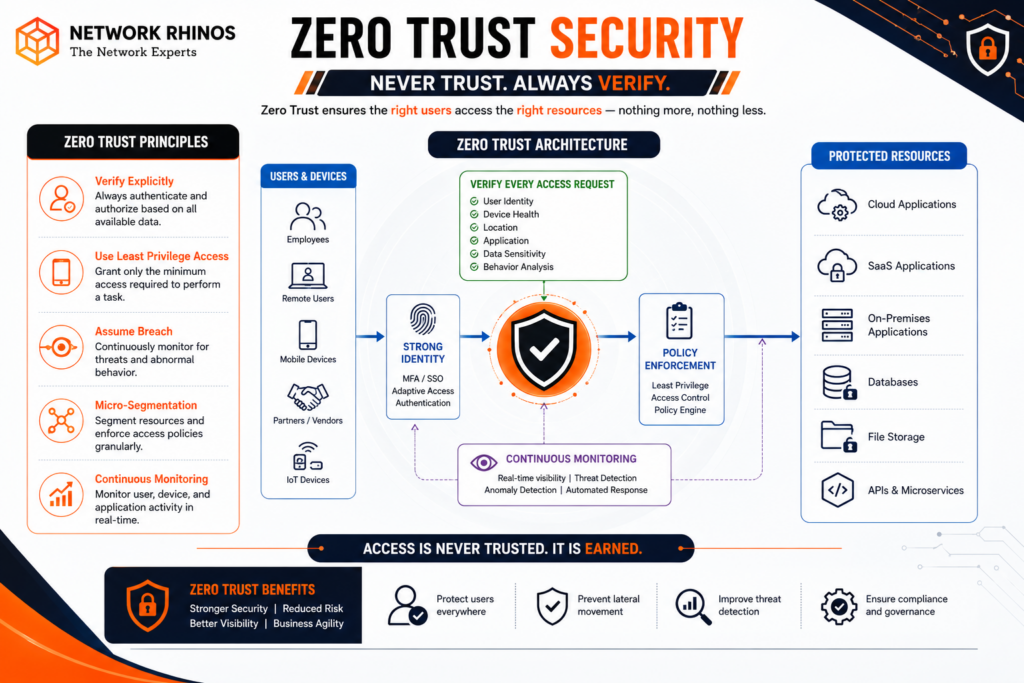
Traditional network security assumed users inside the network could be trusted.
Zero Trust Security follows a different principle:
“Never Trust, Always Verify.”
Every user, device, and application must continuously authenticate before accessing resources.
Key Zero Trust components include:
- Identity verification
- Multi-Factor Authentication
- Device health checks
- Continuous monitoring
- Micro-segmentation
Zero Trust has become one of the most effective defenses against modern cyber threats.
Essential Cybersecurity Best Practices for 2026
Organizations should adopt a proactive cybersecurity strategy by:
- Keeping operating systems updated.
- Enabling Multi-Factor Authentication.
- Encrypting sensitive information.
- Monitoring network activity continuously.
- Performing regular penetration testing.
- Educating employees about phishing attacks.
- Maintaining secure offline backups.
- Implementing Zero Trust Security.
- Conducting vulnerability assessments.
- Using AI-powered threat detection solutions.
Build a Career in Cybersecurity
With cyber threats increasing every year, the demand for skilled cybersecurity professionals continues to grow. Roles such as Security Analyst, SOC Analyst, Penetration Tester, Ethical Hacker, and Cloud Security Engineer are among the most sought-after careers in the IT industry.
If you’re planning to enter this field, enrolling in a Cybersecurity Course in Chennai or a CEH v13 Training in Chennai can help you build practical skills in ethical hacking, network security, vulnerability assessment, and incident response.
Hands-on training combined with industry-recognized certifications can significantly improve your career prospects in cybersecurity.
Frequently Asked Questions
What are the biggest cybersecurity threats in 2026?
The biggest cybersecurity threats include AI-powered cyber attacks, ransomware, phishing, cloud security threats, zero-day vulnerabilities, and social engineering attacks.
Why are AI cyber attacks becoming more dangerous?
AI enables attackers to automate phishing, malware creation, password cracking, and vulnerability scanning, making attacks faster and more convincing.
How can businesses protect themselves from cyber attacks?
Businesses should implement Zero Trust Security, Multi-Factor Authentication, endpoint protection, regular software updates, employee awareness training, and continuous monitoring.
Is cybersecurity a good career in 2026?
Yes. Cybersecurity remains one of the fastest-growing IT fields, with increasing demand for professionals in ethical hacking, cloud security, incident response, and security operations.
Conclusion
The top cybersecurity threats in 2026 highlight a rapidly changing digital landscape where attackers are leveraging AI, automation, and sophisticated social engineering techniques to compromise organizations. Staying ahead requires more than reactive security it demands continuous learning, modern security practices, and skilled professionals who can identify and mitigate emerging risks.
Whether you’re an organization strengthening your defenses or an aspiring IT professional looking to build a career, understanding these cybersecurity trends is the first step toward creating a safer digital future.