The Complete Beginner’s Guide to CCNA Certification: Course, Exam, Fees, Training Options, and Career Opportunities
Introduction
The demand for skilled networking professionals continues to grow as organizations increasingly rely on secure and efficient network infrastructure. For aspiring network engineers, system administrators, and IT support professionals, the CCNA certification is often the first major step toward building a successful networking career.
Whether you are exploring networking for the first time or planning to advance your IT skills, understanding the CCNA course, exam requirements, certification costs, and training options can help you make an informed decision.
This guide covers everything you need to know about Cisco CCNA certification, including the syllabus, exam details, training formats, costs, and career opportunities.
What is CCNA Certification?
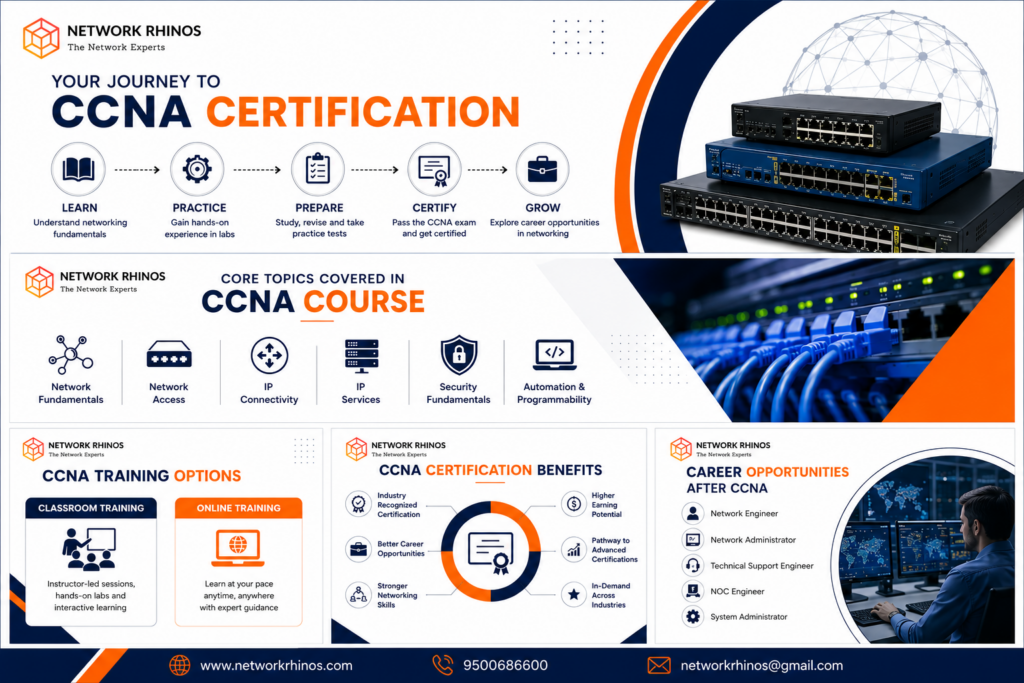
CCNA (Cisco Certified Network Associate) is an entry-level Cisco certification designed to validate foundational networking knowledge and practical skills. It is recognized globally and serves as one of the most respected credentials in the networking industry.
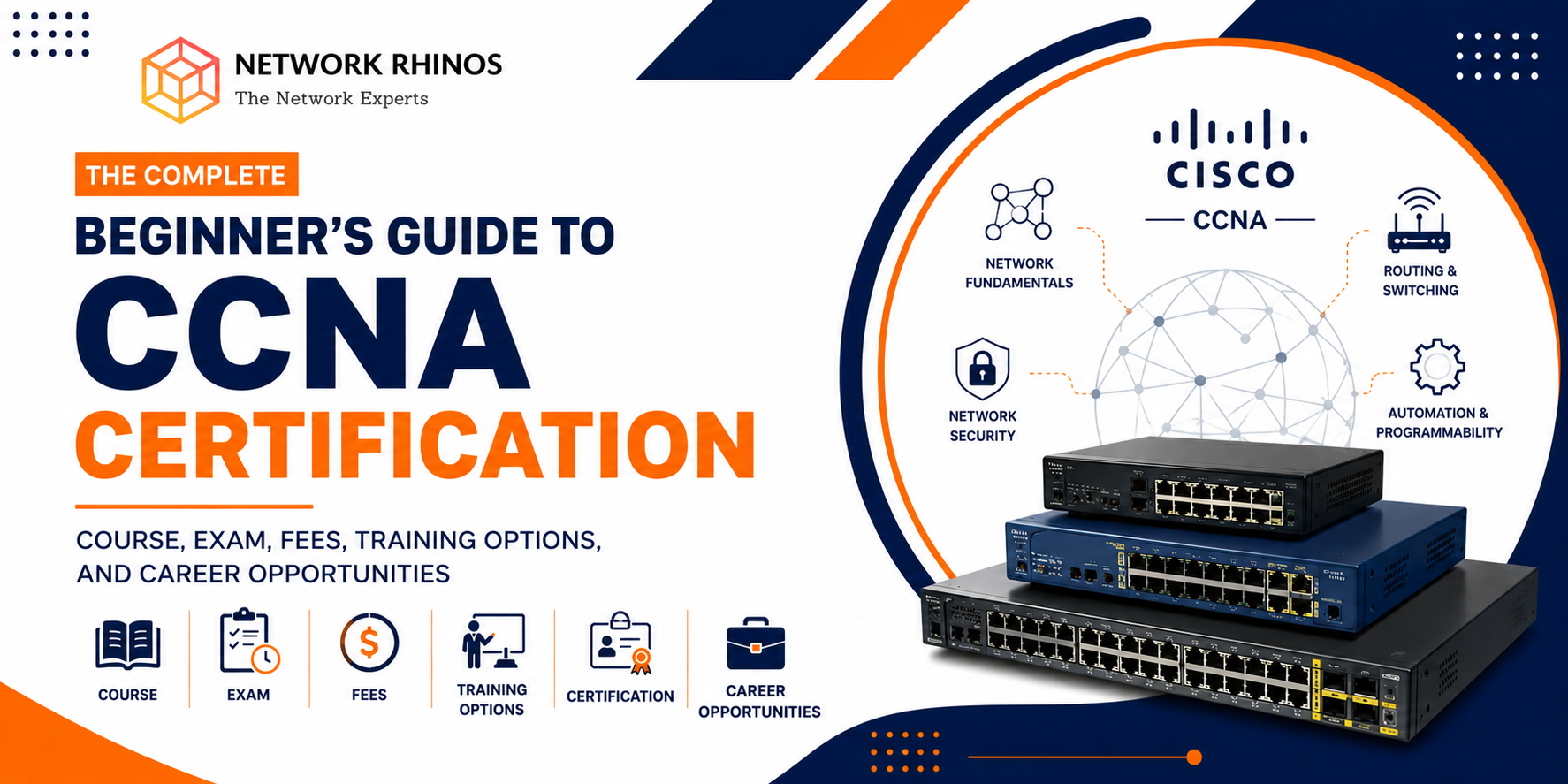
The CCNA certification demonstrates that an individual understands:
- Network fundamentals
- IP connectivity
- Network access
- Security fundamentals
- Automation and programmability
- Network troubleshooting
As part of the broader Cisco certification pathway, CCNA provides a strong foundation for advanced networking and cybersecurity certifications.
Why is Cisco CCNA Important?
Networking forms the backbone of modern IT infrastructure. Businesses rely on secure and reliable networks for communication, data transfer, cloud connectivity, and cybersecurity.
The Cisco CCNA certification helps professionals:
- Build a strong networking foundation
- Understand real-world networking concepts
- Improve troubleshooting skills
- Prepare for advanced Cisco certifications
- Enhance career opportunities in IT networking
Many employers view CCNA as a valuable credential when hiring for networking and infrastructure roles.
What Will You Learn in a CCNA Course?
A standard CCNA course covers a wide range of networking topics designed to prepare candidates for the CCNA certification exam.
1. Network Fundamentals
Students learn:
- Network architecture
- OSI and TCP/IP models
- Ethernet concepts
- IPv4 and IPv6 addressing
2. Network Access
Topics include:
- Switching concepts
- VLANs
- Wireless networks
- Spanning Tree Protocol
3. IP Connectivity
Students gain knowledge about:
- Routing protocols
- Static routing
- OSPF
- Route selection
4. IP Services
This section covers:
- DHCP
- DNS
- NAT
- NTP
- QoS fundamentals
5. Security Fundamentals
Security-related topics include:
- Access control
- Device hardening
- VPN concepts
- Security best practices
6. Automation and Programmability
Modern networking increasingly relies on automation. The CCNA course introduces:
- APIs
- Software-defined networking
- Network automation concepts
Different Types of CCNA Training
Today, students can choose from multiple training formats depending on their learning preferences and schedules.
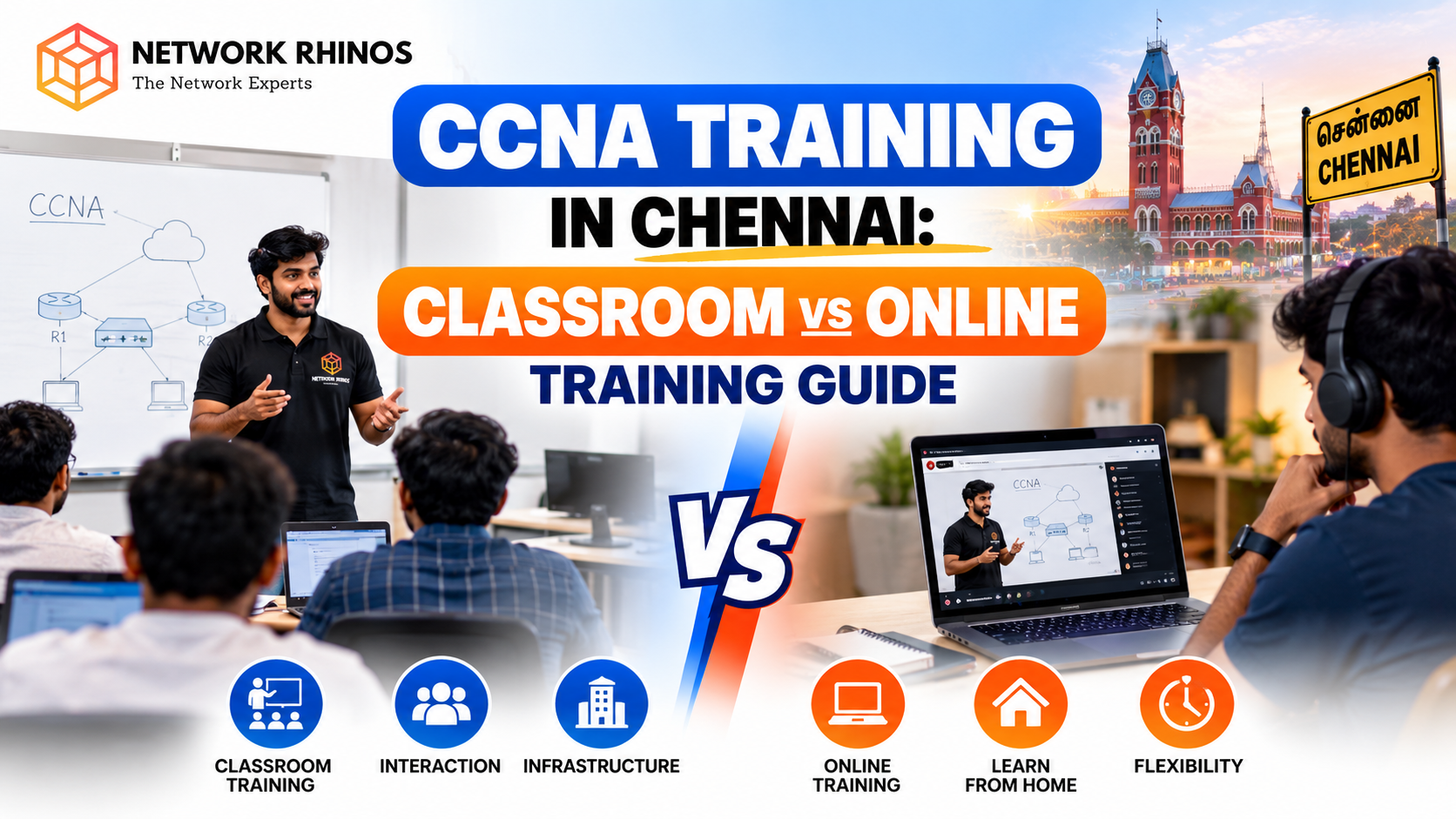
1. Classroom Training
Many learners prefer CCNA classroom training because it provides:
- Face-to-face interaction
- Instructor guidance
- Lab-based learning
- Structured schedules
CCNA class room training remains popular among beginners who benefit from direct support during practical exercises.
2. Online Training
The popularity of the CCNA course online has increased significantly in recent years.
Benefits include:
- Flexible learning schedules
- Access from anywhere
- Self-paced study
- Recorded sessions
Online training can be particularly beneficial for working professionals who need to balance studies with job responsibilities.
3. Hybrid Learning
Some learners combine online lectures with physical lab sessions to gain both flexibility and hands-on experience.
How to Choose the Best CCNA Training Center
Selecting the right learning environment plays an important role in certification success.
When evaluating a CCNA training center, consider:
1. Experienced Instructors
Qualified trainers can simplify complex networking concepts and provide real-world insights.
2. Practical Labs
Networking is a hands-on field. Ensure the CCNA training includes extensive lab practice.
3. Updated Curriculum
The course should align with the latest CCNA certification objectives.
4. Student Support
Good training providers offer:
- Doubt-clearing sessions
- Practice tests
- Career guidance
- Exam preparation resources
Many students search online for the best CCNA training center, Cisco classes near me, Cisco training near me, or a CCNA center near me when exploring local learning options.
CCNA Training in Chennai: What Students Should Know?
Chennai has become one of India’s major IT and technology hubs, creating strong demand for networking professionals.
Students looking for CCNA training in Chennai often compare:
- Course curriculum
- Lab facilities
- Trainer experience
- Placement assistance
- Student reviews
When evaluating a CCNA training course in Chennai, it is important to focus on learning quality rather than simply selecting the lowest-cost option.
Many aspiring network engineers also search for a CCNA institute in Chennai or a CCNA training center in Chennai that offers practical lab exposure and updated course content.
Understanding CCNA Course Fees
One of the most common questions among beginners is about CCNA course fees.
The overall training cost varies based on factors such as:
- Training format
- Instructor expertise
- Duration
- Lab access
- Additional study materials
Classroom programs may have different pricing compared to online courses.
Before enrolling, students should understand what is included in the fee structure, such as:
- Training sessions
- Lab access
- Practice exams
- Study materials
- Certification guidance
CCNA Exam Details
The CCNA exam is designed to assess a candidate’s networking knowledge and practical understanding.
1. Exam Overview
The CCNA exam covers:
- Network fundamentals
- Network access
- IP connectivity
- IP services
- Security fundamentals
- Automation and programmability
Candidates are expected to demonstrate both theoretical knowledge and practical problem-solving abilities.
2. Exam Preparation Tips
To improve your chances of success:
- Follow a structured study plan.
- Complete hands-on lab exercises.
- Review official documentation.
- Take practice tests regularly.
- Use a reliable CCNA study guide.
CCNA Certification Exam Cost
Many aspiring professionals ask about:
- CCNA certification exam cost
- Cost of CCNA exam
- CCNA certificate price
Exam fees may change periodically based on Cisco’s policies and regional pricing. Therefore, candidates should always verify the latest pricing information through official Cisco resources before scheduling their exam.
In addition to the examination fee, students may also budget for:
- Training programs
- Practice exams
- Study materials
- Lab equipment
Understanding these expenses helps candidates prepare effectively for the CCNA certification journey.
Best Resources for CCNA Exam Preparation
Official Documentation
Cisco’s official learning materials provide comprehensive coverage of exam topics.
CCNA Study Guide
A structured CCNA study guide can help learners organize their preparation and focus on key concepts.
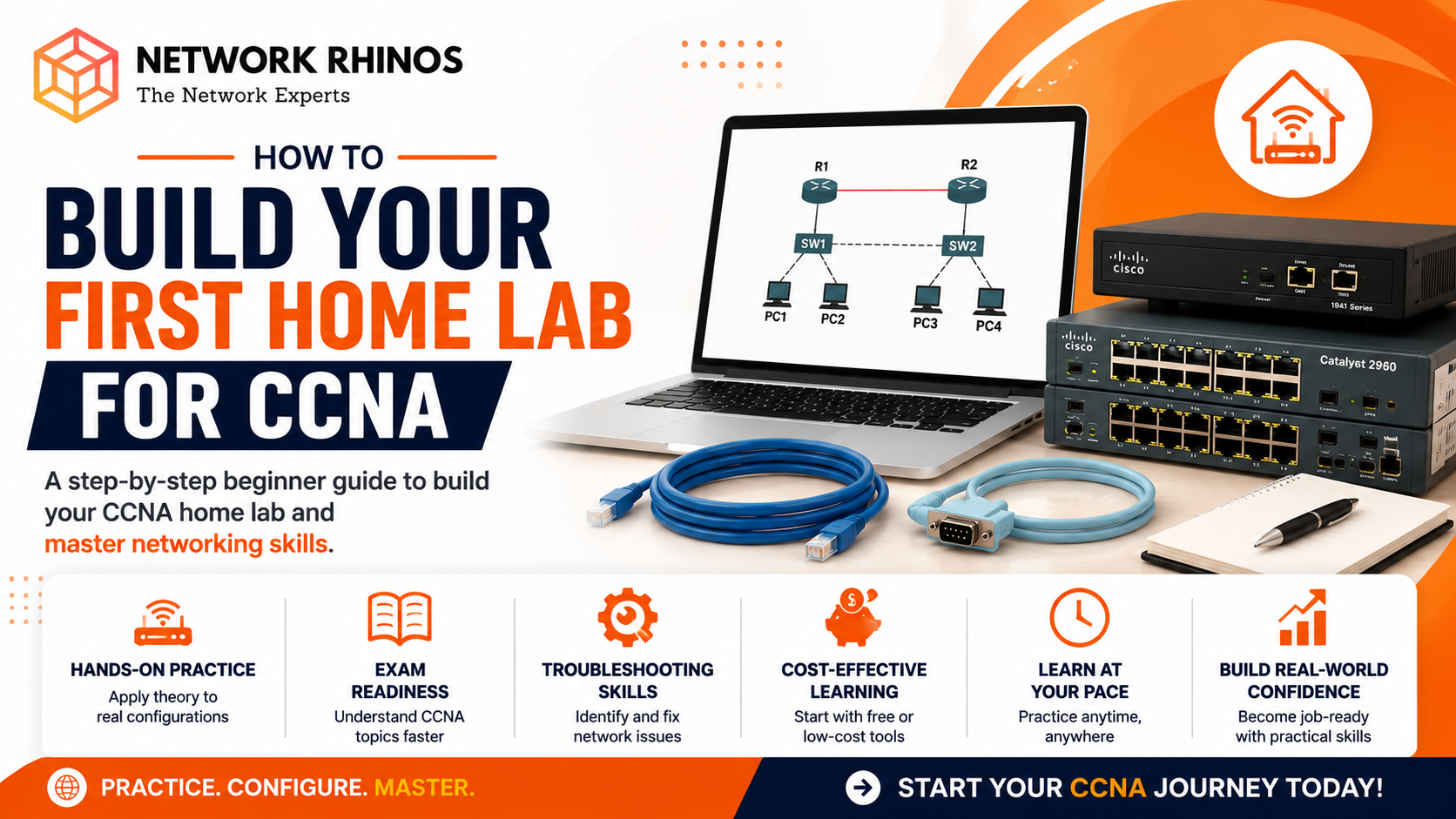
Practice Labs
Hands-on experience is essential for mastering networking technologies.
Mock Exams
Practice tests help identify weak areas and improve confidence before the actual CCNA exam.
CCNA Course with Certificate: What Does It Mean?
Many learners search for a CCNA course with certificate when comparing training options.
Typically, this may refer to:
- Course completion certificates issued by training providers
- Industry-recognized certification obtained after passing the official CCNA exam
It is important to understand that completing a training course and earning the official Cisco CCNA certification are separate achievements.
The globally recognized credential is awarded after successfully passing the official CCNA certification exam.
Career Opportunities After CCNA Certification
A CCNA certification can open doors to several entry-level and mid-level networking positions.
Common job roles include:
Network Administrator
Responsible for maintaining and monitoring organizational networks.
Network Engineer
Designs, implements, and troubleshoots network infrastructure.
Technical Support Engineer
Provides technical assistance related to networking issues.
System Administrator
Manages servers, network services, and IT infrastructure.
NOC Engineer
Works in Network Operations Centers to monitor and support enterprise networks.
Future Learning Paths After CCNA
After completing CCNA, professionals often pursue advanced Cisco networking courses and certifications, including:
- CCNP Enterprise
- CCNP Security
- Cisco CyberOps
- Cisco DevNet
- Cisco Certified Specialist Certifications
These advanced credentials can help professionals specialize in specific networking domains.
Frequently Asked Questions
1. Is CCNA suitable for beginners?
Yes. CCNA is widely regarded as one of the best entry-level networking certifications for beginners.
2. How long does it take to complete a CCNA course?
The duration varies depending on the training format and learning pace, but many learners complete their preparation within a few months.
3. Is CCNA certification worth it?
For individuals pursuing networking, infrastructure, cybersecurity, or systems administration careers, CCNA remains a valuable industry-recognized credential.
4. Can I learn CCNA online?
Yes. Many students successfully prepare through a CCNA course online combined with practical lab exercises.
5. Does CCNA require prior experience?
No. While basic computer knowledge is helpful, CCNA is designed for beginners entering the networking field.
6. Does CCNA Training Include Interview Preparation?
Yes, many CCNA training institutes offer interview preparation through mock interviews, technical Q&A sessions, resume guidance, and real-world networking scenarios to help students prepare for job opportunities.
Conclusion
The CCNA certification continues to be one of the most respected and widely recognized networking credentials in the IT industry. Whether you choose classroom learning, online study, or a hybrid approach, a strong understanding of networking fundamentals can create a solid foundation for long-term career growth.
By understanding the CCNA course structure, exam requirements, certification costs, training options, and career opportunities, aspiring professionals can make informed decisions and begin their networking journey with confidence. As organizations continue to expand their digital infrastructure, skilled networking professionals with Cisco certification credentials are likely to remain in demand across industries.